
书签
为此书签设置标题。
书签已保存
屏幕截图
广告
说明

Connect with the kubeconfig you already use. What you can see and change is exactly what that identity is allowed to do. Click a catalog row to open that context in this app. The radio beside the row only writes kubectl current-context, so the command line can follow. This app does not read that field. Several contexts can stay open here while kubectl still has one current context.
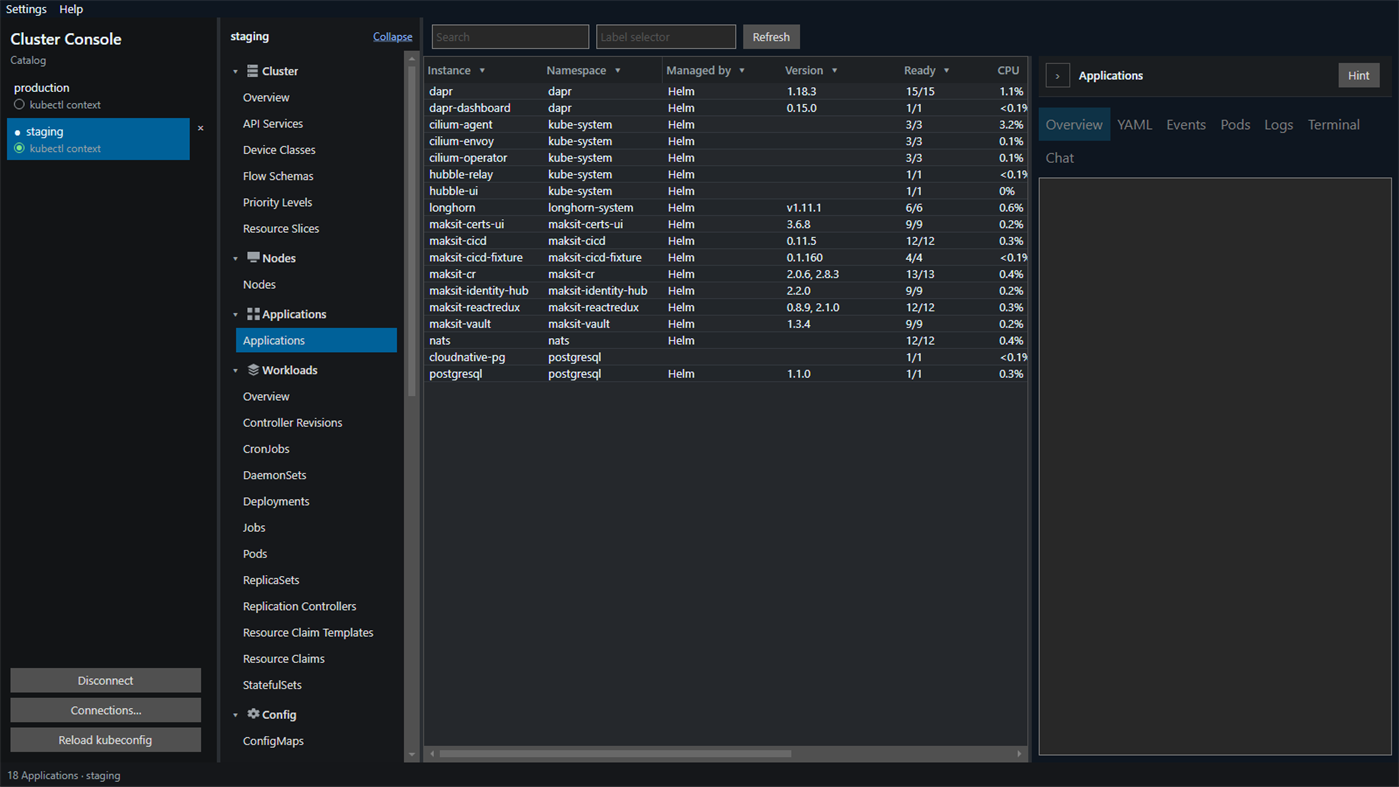
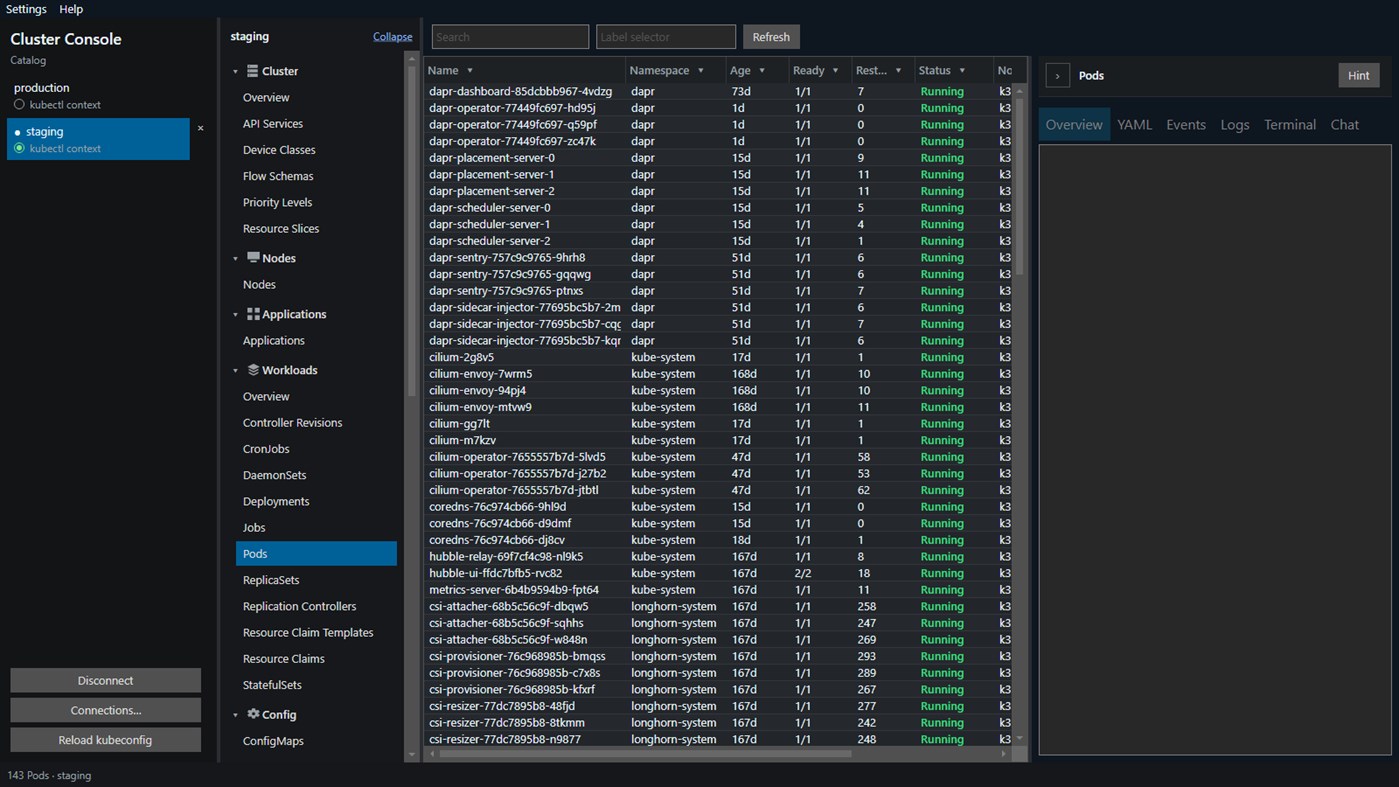
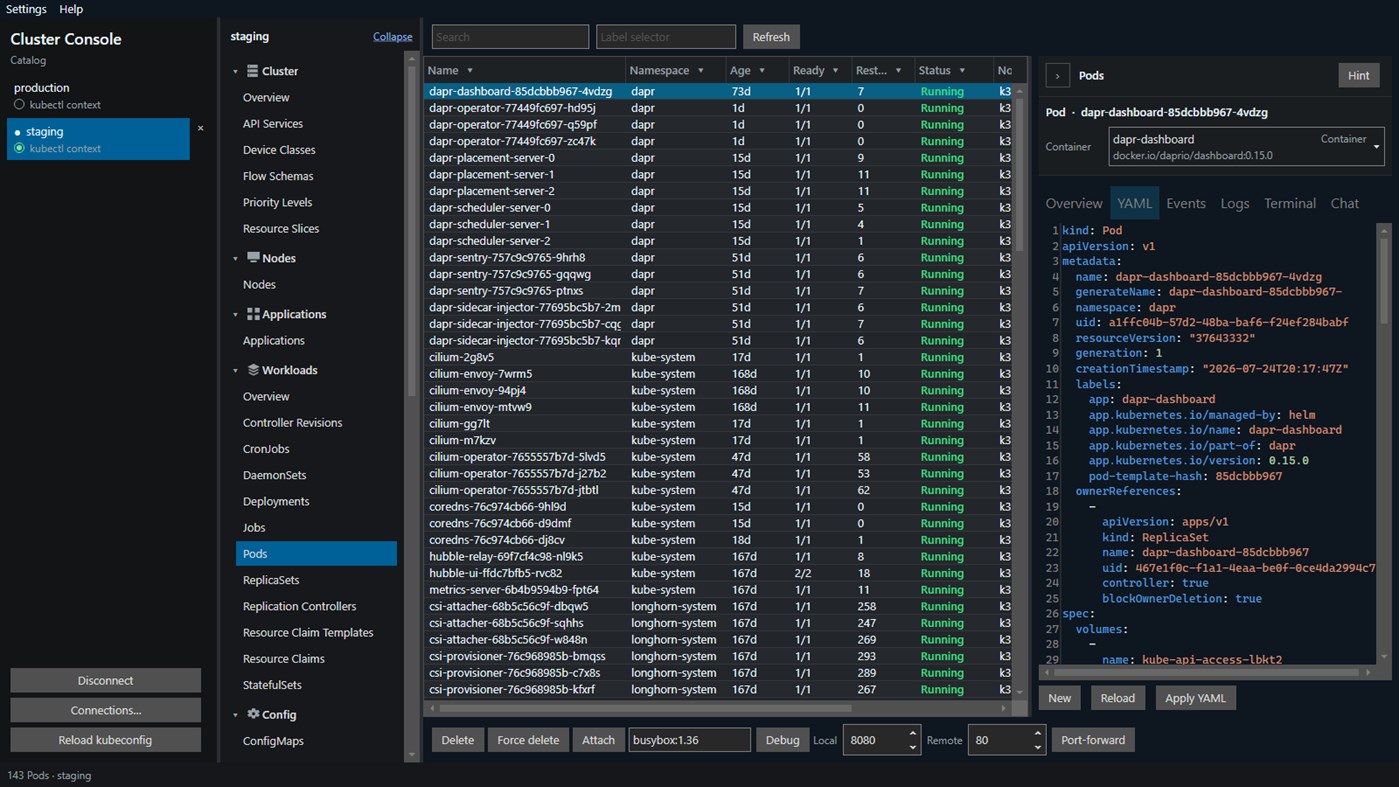
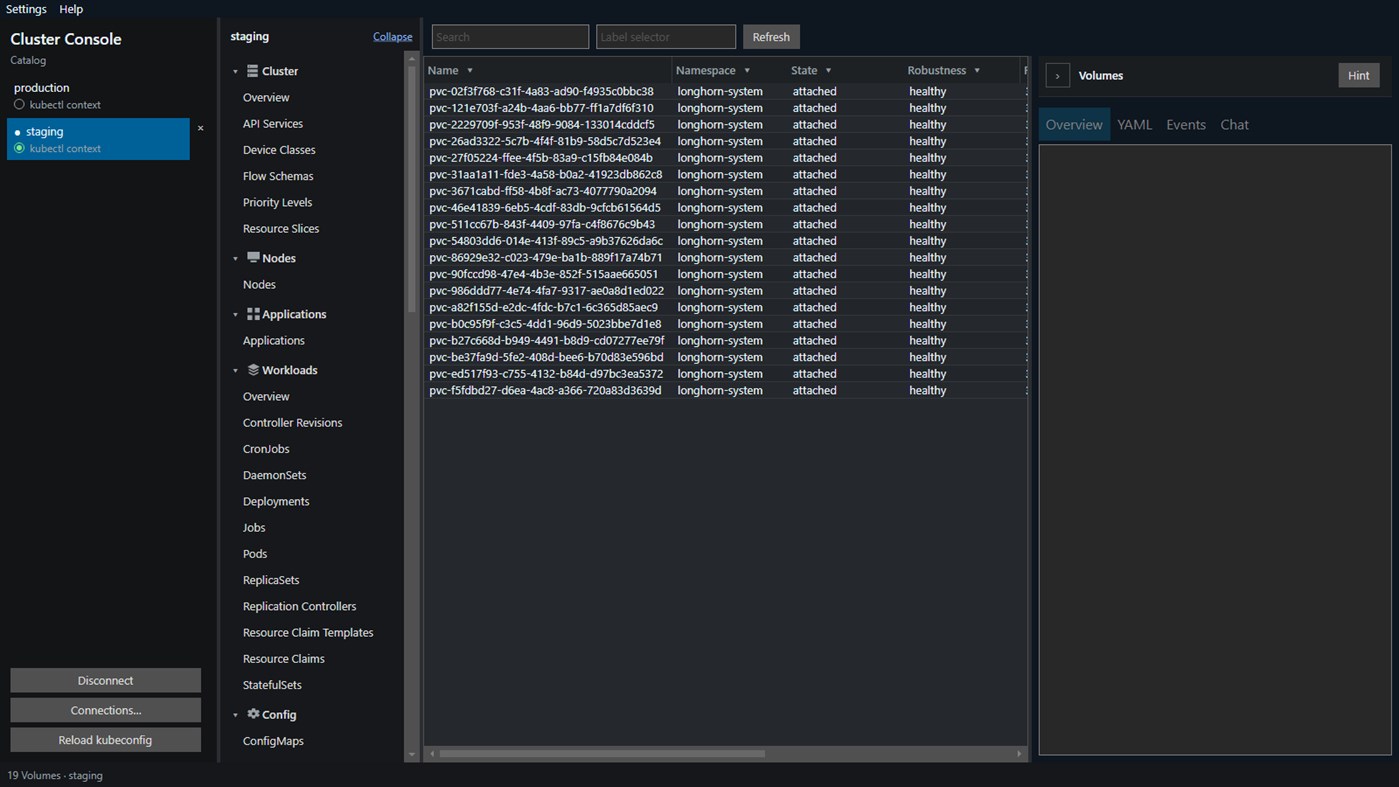
Move through the cluster from one navigator: cluster and nodes, applications, workloads, config, network, storage, namespaces, events, Helm releases, Dapr, access control, and custom resources, including CRDs already installed. Longhorn volumes and nodes, and CloudNativePG clusters, appear when those APIs are installed. Several contexts can stay connected. Add a context with a token, a client certificate, pasted k3s certificate data, or a username and password. The open table watches the API, and a label selector is sent with the list. Search filters the rows already loaded. Filters and sort stay per cluster. Selecting several rows runs a footer action on each of them. Custom resource tables show extra columns from the CRD. Open a row for YAML, events, and status. Hint explains the kind on screen.
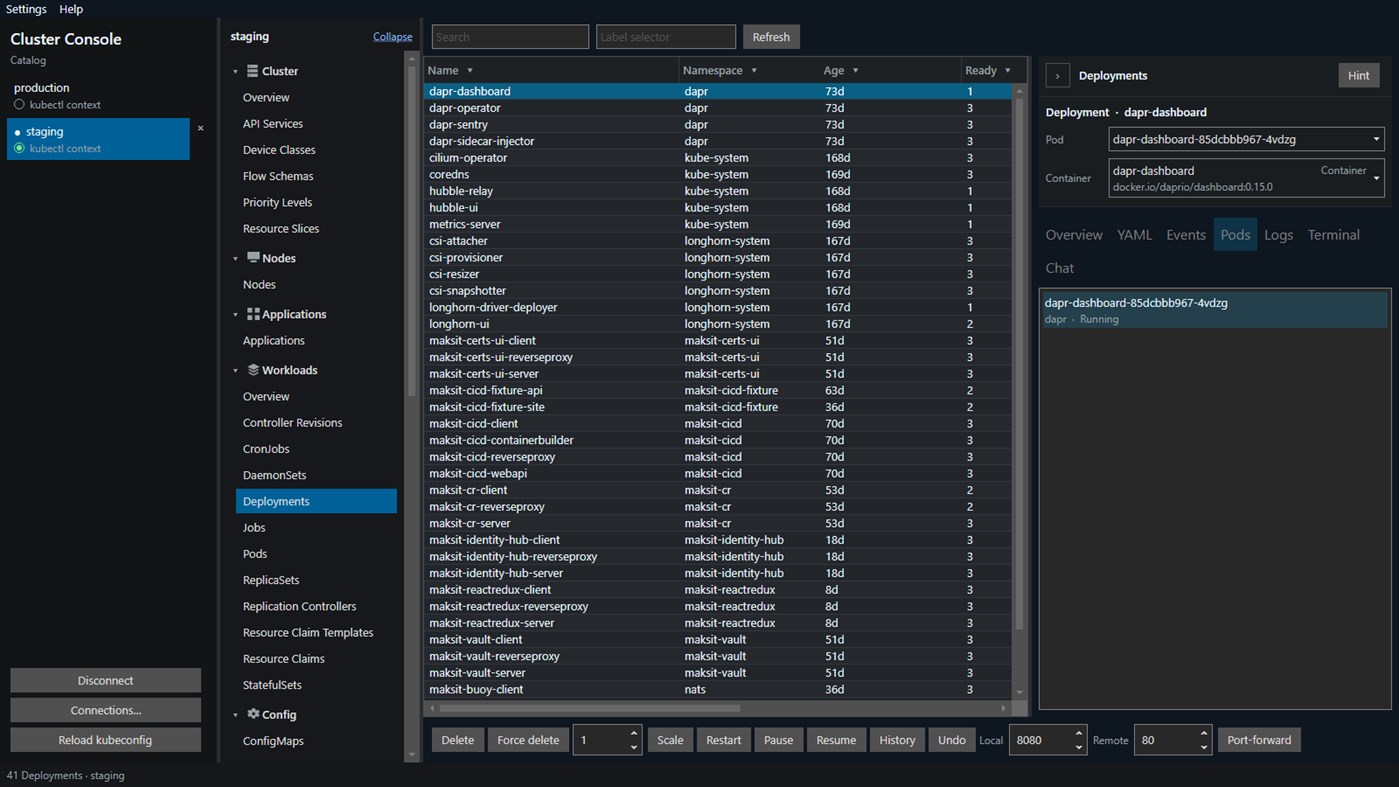
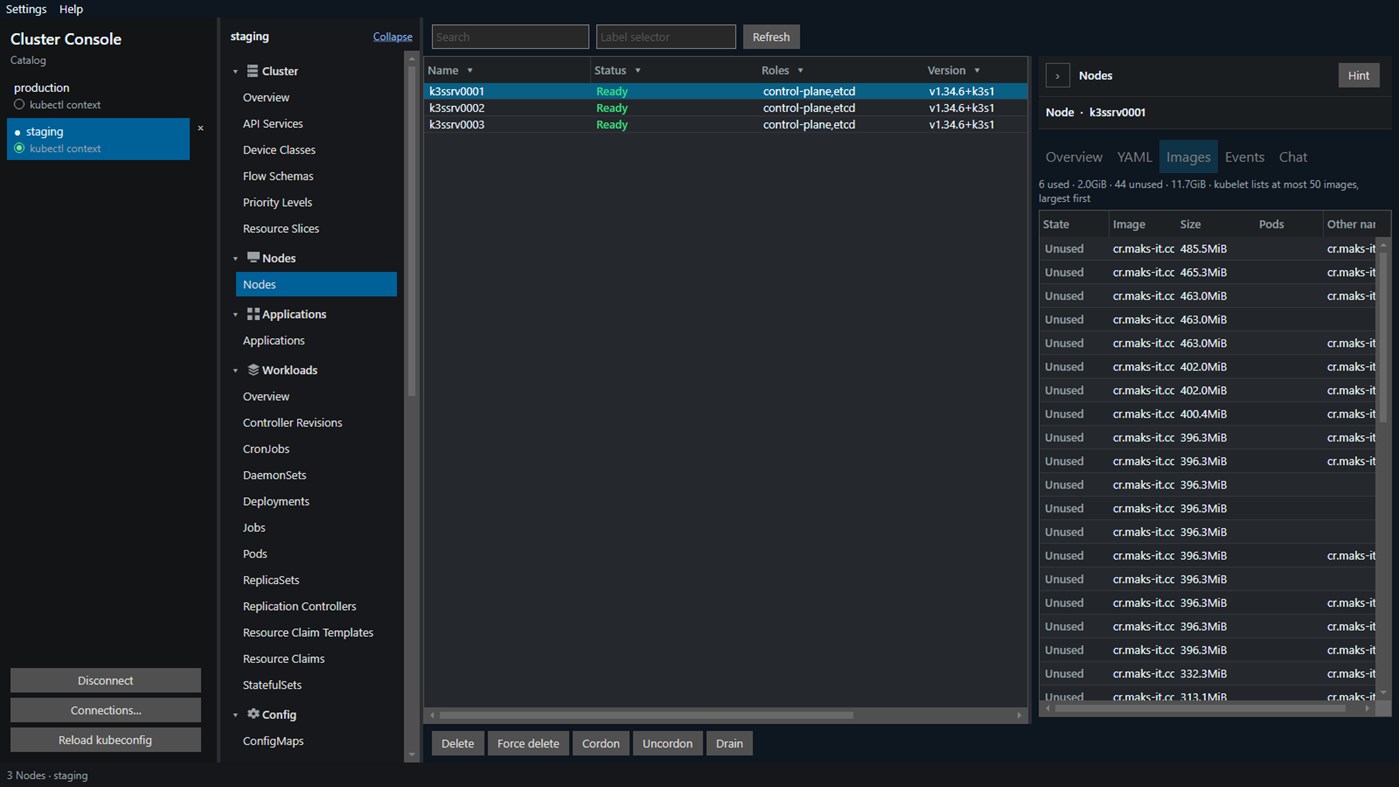
Everyday changes stay in the same window. Apply or create YAML. If the API server rejects an apply patch, apply falls back to create or replace. JSON and YAML highlighting follows the document. Force-delete strips finalizers. Scale a Deployment, StatefulSet, ReplicaSet, or ReplicationController. Restart a Deployment, StatefulSet, or DaemonSet. Pause, resume, and undo a Deployment rollout. Trigger a CronJob. Force delete namespace removes a selected namespace, except default, kube-system, kube-public, and kube-node-lease. Cordon and Drain stay hidden unless another Ready node can still take pods. Uncordon still restores a node that is already cordoned. Drain asks first and shows which pods will move and which will remain, including anything a disruption budget would refuse. When AI is on, that dialog also includes a short note. The note does not drain the node. The Images tab marks cached images Used or Unused from the pods on that node. On a pod, follow the log, open a shell, attach output, or add a debug container. The image defaults to busybox and stays until the pod is recreated. ConfigMaps and Secrets edit as data keys, with a decoded preview. A Service shows Active, Pending, or Unreachable.
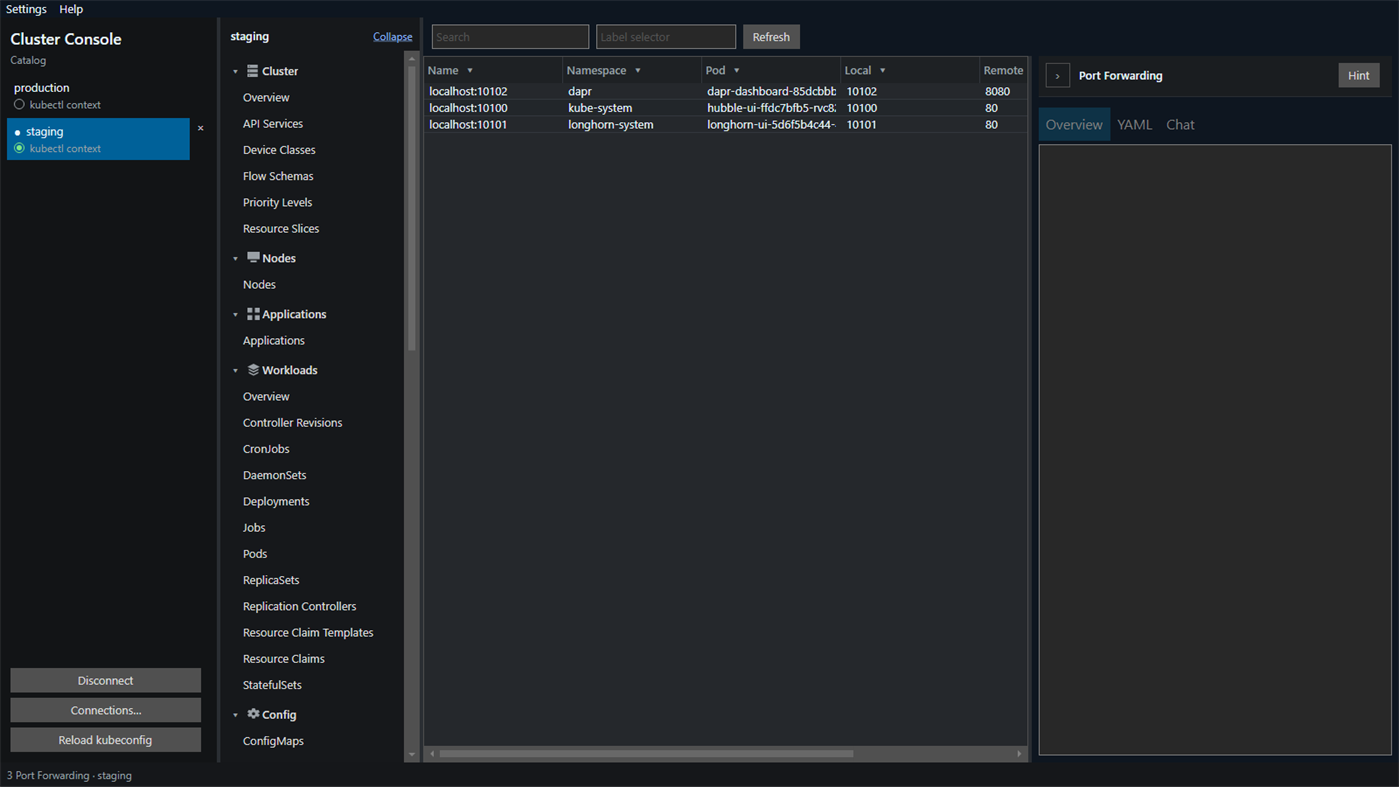
Resize a persistent volume claim, or change reclaim policy on a storage class and its volumes. Approve or deny a certificate signing request, and create a ServiceAccount token that is shown once. Port forwards are saved, restored when you reconnect, and a double-click on an active forward opens it in the browser. Rebind changes the local port.
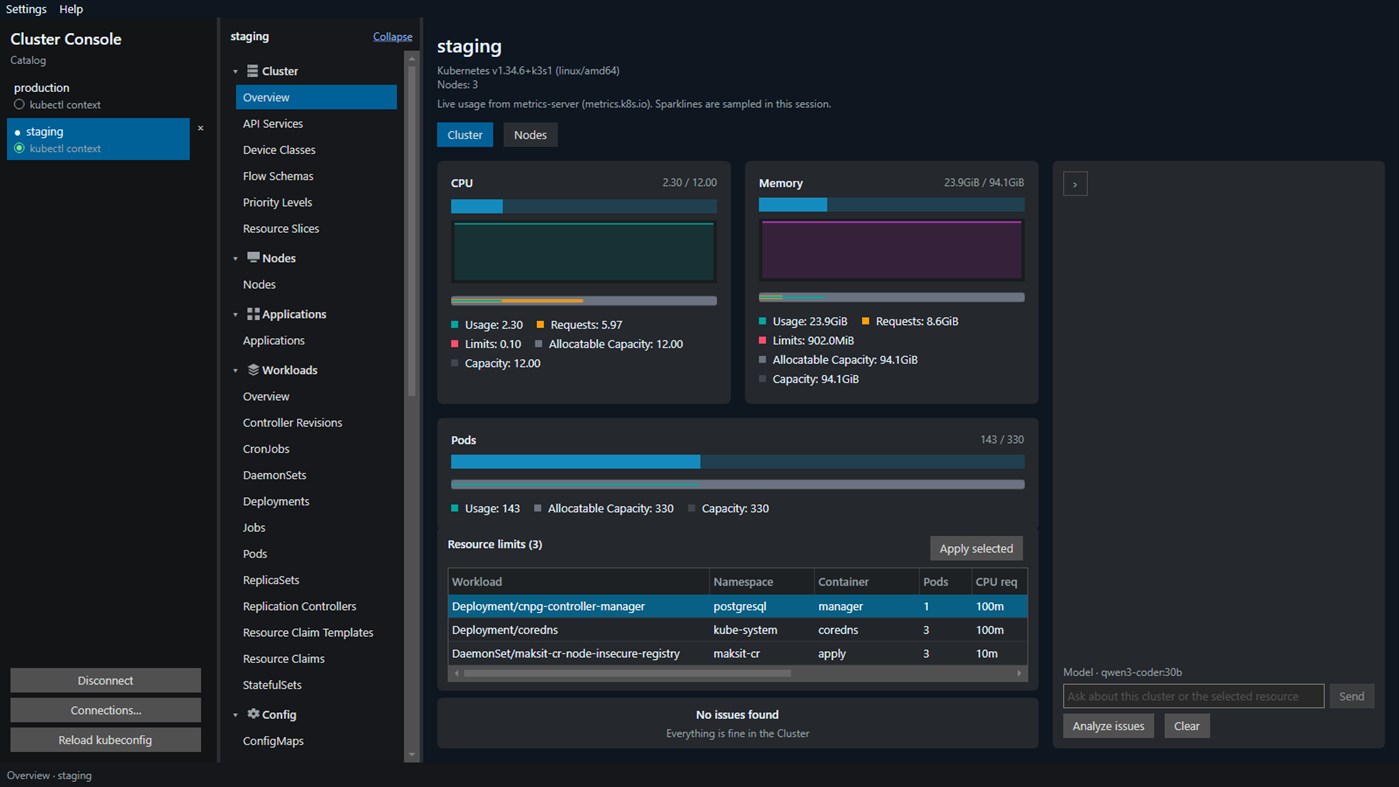
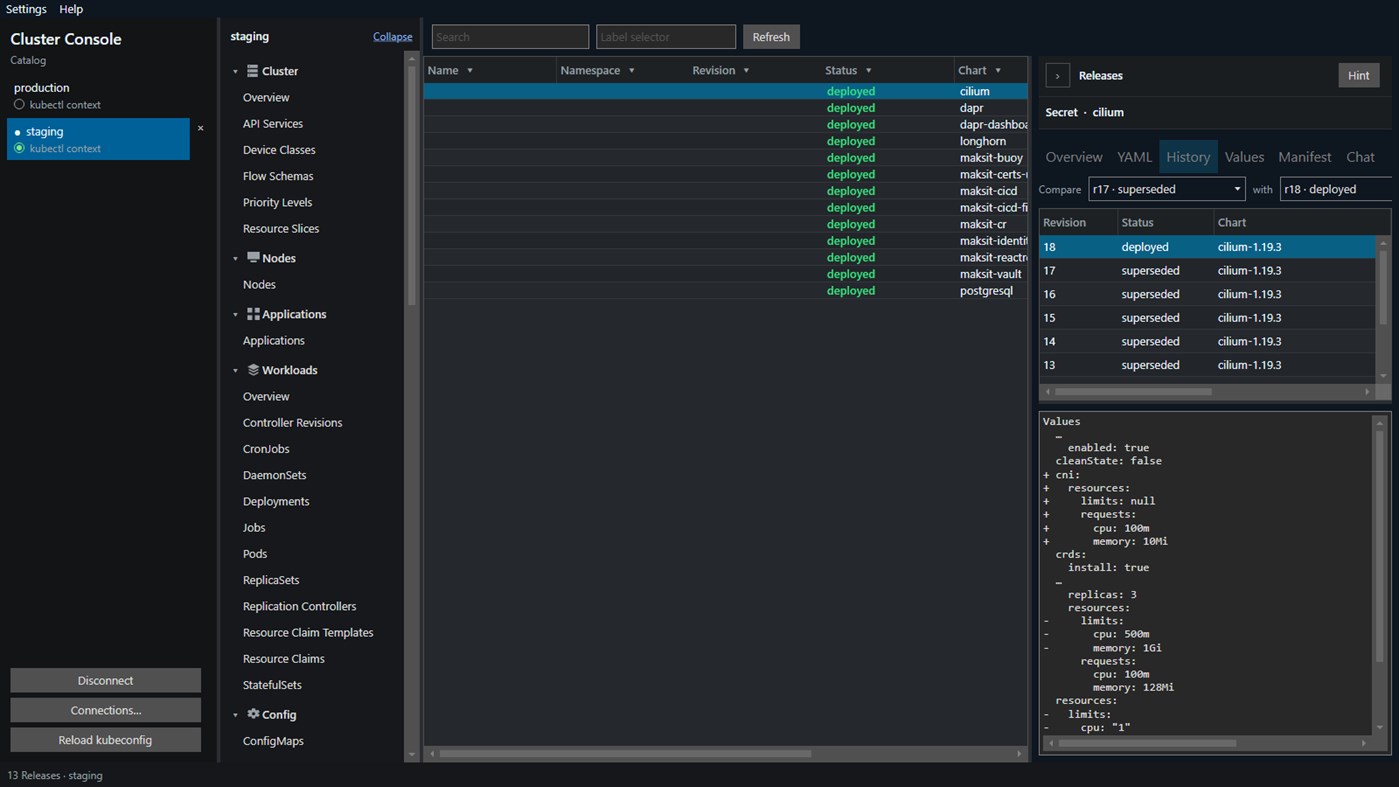
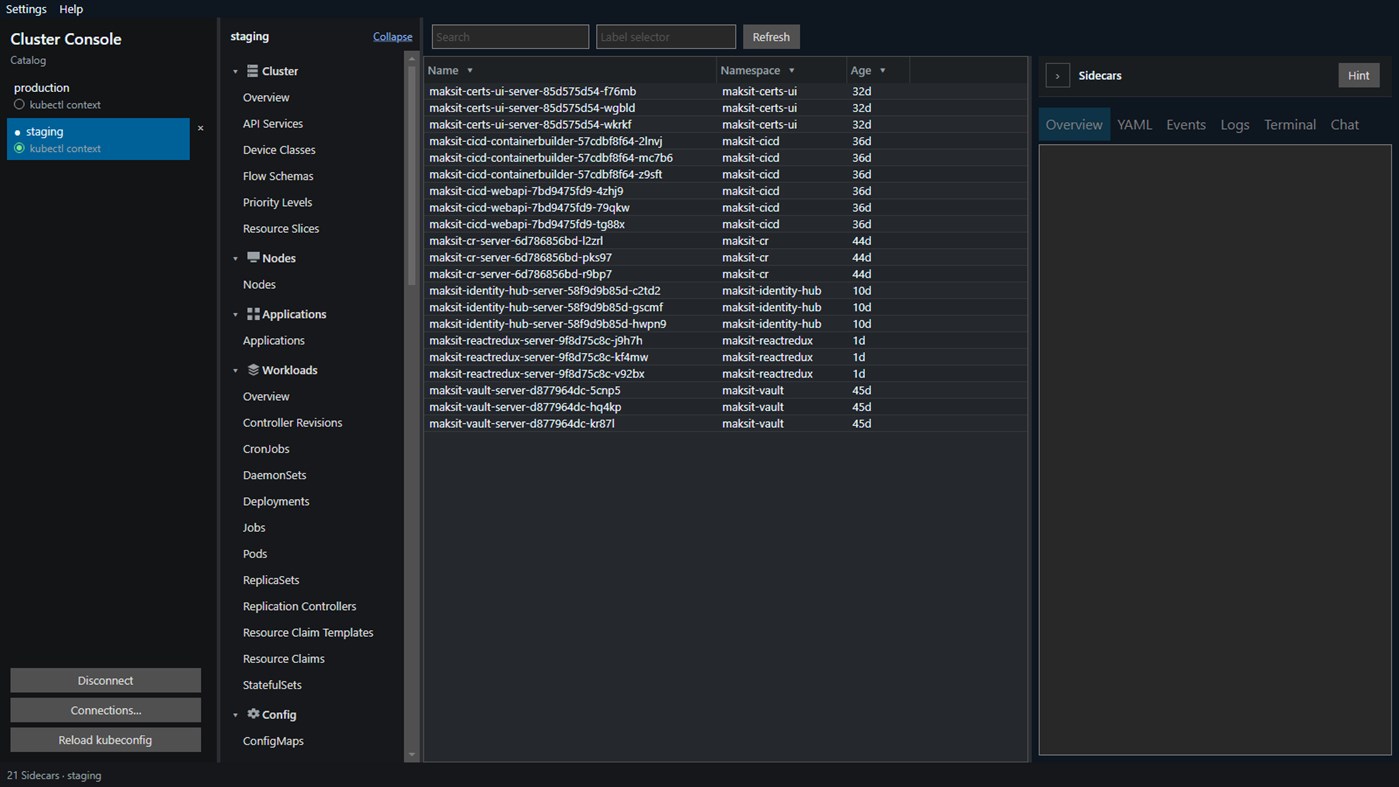
CPU and memory appear on the overview, applications, and workload tables when the cluster has metrics-server. From the overview you can patch container CPU and memory against node capacity. Persistent volumes and claims open a file browser for viewing, editing, downloading, and uploading files. Helm charts list each installed chart version. A release shows revision history, user-supplied values, the rendered manifest, and a diff between two revisions. Chart install and upgrade stay on the Helm CLI. Dapr pages list components, configurations, subscriptions, sidecars, and the control plane that are already in the cluster.
Chat is optional and stays on this PC. It talks to a local Ollama server, on the overview and on a selected resource. The model is any one you have pulled. qwen3:8b is the default and is enough to read issues, YAML, logs, and events. On the overview, Analyze issues explains the current warnings and errors. Repairs work better with a larger model such as qwen3:14b, qwen3:32b, or qwen3-coder:30b. Turn on Allow the assistant to change the cluster and the same chat can restart a workload, delete a pod, scale, or apply YAML. Each of those waits for Approve or Reject. Reject leaves the cluster unchanged. Pod delete here is not force-delete. Cluster data is not sent to a cloud AI service.
Your layout, open clusters, and saved port forwards are stored on this computer. Cluster Console talks to a cluster you already run.
You need 64-bit Windows, a kubeconfig that can reach a running cluster, and a network path to that cluster's API. Install Ollama locally only if you want Chat.
价格历史
- 目前价格: 免费
- 最小值: 免费
- 最大值: 免费
其他平台 (0)
| Cluster ConsoleWindows Store当前页面 | 免费 |
目前仅在此商店提供。
列表 (0)
0
- Cluster Console
积分 (0)
0
排名 (0)
0
评论 (0) ¡
来发第一条评论吧
开发者
- MaksIT
- 关注者: 0
- 平台: Windows 应用 (1)
- 折扣: 0
- 列表: 0 + 0
- 积分: 0 + 0 ¡
- 排名: 0
- 评论: 0
- 视频: 0
- RSS: 订阅
新版变化
- 版本: PC
- 最后更新:
其他信息
 https://maks-it.com/products/cluster-console
AppAgg 评分
1,130
AppAgg 预估评分:
Cluster Console
开发者: MaksIT
1,130 白银
评分越高,通常表示其在 AppAgg 上的各项指标表现越好。
基于: 热度 · 用户评分 · 新鲜度 · 优惠 · 商店数据 · 社区活跃度
根据最新 AppAgg 数据每日重新计算。
网站徽章:  已复制!
已复制!
摘要
Cluster Console 短网址: 已复制!- Windows Store
在 AppAgg 上,您可以关注由 MaksIT 开发的“Cluster Console”应用。适用平台:Windows;分类:开发人员工具。 AppAgg 评分:1,130(白银)。 AppAgg 为该应用记录的积分:已确认 0,间接 0。 收录此应用的公开列表:0 个。将其保存到私密列表的用户:0 人。 AppAgg 用户尚未对该应用评分。 已确认积分记录已登录 AppAgg 用户前往商店的操作,间接积分则基于商店数据。 两个计数分别表示公开列表数量,以及将应用或游戏保存到私密列表的用户人数。 该应用首次发布于。 该应用最近更新于。 该应用目前可免费获取。 该应用支持以下语言:English。 查看价格历史、将应用加入列表,或关注开发者。 通过RSS 订阅源关注该应用今后的优惠和更新。 AppAgg 不托管或分发该应用。 与该应用相关的所有商标、徽标和屏幕截图均归其各自所有者所有。
您可能还喜欢
最新讨论
 应用NauticPlayer This app is absolute cinema. Honestly, it’s one of the best media players I’ve ever tried, and I’m s...
  Manuel16
  应用Screen Beings - Desktop Pet & Study Companion This is my app so I’m a little bias but as someone from the ADHD community that teaches ADHD and neu...
  Tarelle Irwin6
  应用Aadi vault good it ia a encrypter and good you my work on office
  Aditya Rai5
  应用Typing 365 | Daily Typing Trainer The best typing app ever. With Typing 365 you don’t have to force yourself for couple minutes traini...
  Ahmad Mozaffar5
  应用Zefir Calendar — Calendar in the Taskbar excelente app! Superando todas as espectativas!
  Diógenes Magnus5
  应用LockinRa LockinRa 리뷰 LockinRa는 작업 관리, 집중력 도구, AI 코칭을 하나의 데스크톱 앱으로 통합한 무료 Windows 생산성 프로그램입니다. 클라우드 동기화 없이 로컬 ...
  abhilok reddy6
  应用CN Vault I Love this app CN Vault is a user-friendly app that helps keep your passwords safe and secure. If y...
  Marjuk Amin5
